Maroc-Amérique :Histoire et diplomatie

La politique étrangère de l'Amérique et les éfforts de la C.I.A.pour combattre le terrorisme pour un monde plus meilleurs et en paix.

samedi 7 novembre 2009

King Mohamed 6 :Kingdom's sovereignty, national unity and territorial integrity

discours_royal_M

Full text of HM the king's speech on occasion of 34th anniversary of the Green March

Praise be to God     May peace and blessings be upon the Prophet, His Kith and Kin


My loyal subjects,

         As we celebrate the thirty-fourth anniversary of the glorious Green March, we feel even more deeply committed to the oath of this epic event, to the preservation of the Kingdom’s territorial integrity, to our sacred, immutable values, and to the country’s sovereignty. This commitment is best reflected by the close bond between the Throne and the people, and by the nation’s unwavering unanimity on its founding principles.

    The commemoration of this epoch-making event gives us the fortitude and inspiration we need to confront, in a wise, resolute manner, the conspiracies hatched by the adversaries of the Moroccanness of the Sahara. We shall press ahead with our constructive initiatives which are designed to achieve progress and consolidate unity in our southern provinces. Among our chief assets, in this regard, are a closely-knit home front and a vibrant democracy, both of which stem from the will of the nation.

    In view of the above, I have decided that the spirit of the Green March should be rekindled so that we may rise to current and future challenges with respect to our national cause. To this end, I will launch an integrated plan which will centre on the following five actions:

    First: ensure that our Saharan provinces feature prominently in the advanced regionalization system we wish for in order to enable the region’s inhabitants to have more say in the running of their affairs.
Second: ask the government to make these provinces a model of devolution and good local governance, provide them with highly qualified staff, and grant them broad powers to be exercised under the supervision of Governors and Walis.

    Third: restructure the Royal Advisory Council for Saharan Affairs by the end of the current mandate, reconsider its membership and open it to new members known for their competence and keen sense of patriotism, revamp the Council’s structures and make sure they are pertinent, see that the Council’s working methods are adapted to new challenges, and enable the Council to defend the Moroccanness of the Sahara and ensure the region’s development more efficiently.

     Fourth: review the area of competence and territorial jurisdiction of the Agency for the Development of the Southern Provinces by focusing its action on the Saharan provinces, on the implementation of human development projects, and on local programs that create jobs for young people and enhance social justice; facilitate the homecoming of all those who repent and who want to return to their motherland from the Tindouf camps, make sure they are properly welcomed and facilitate their social insertion.

     Fifth: see that political parties, trade unions, community organizations, the media and the nation’s productive and creative forces discharge their mission in terms of helping citizens organize their affairs and promoting patriotism and civic values. This task should not be left to government institutions only; it requires the mobilization of all national and local players.

    In this regard, I commend my loyal subjects in the Sahara, including the dignitaries, elected officials and civil society representatives, for their enduring faithfulness to their Moroccan identity.

    My loyal subjects,

    The task of implementing policy and development guidelines that are appropriate for the current phase is not to be confined to the domestic front. It is just as important for the combined efforts of official and parallel diplomacy to be geared towards defending the Moroccanness of the Sahara and the autonomy proposal that we tabled, and whose seriousness and credibility were praised by the United Nations.

   As you know, the adversaries of our territorial integrity have been adamant on hampering the negotiating dynamic triggered by our initiative at the United Nations. In fact, their increasingly hostile stances now verge on a blueprint for extortion, conspiracy, pressure, provocation and distortion of the spirit of international legitimacy.

    As we reaffirm our commitment to negotiation on our autonomy initiative under the auspices of the United Nations, we believe the time has come to deal with this escalation of aggression in a rigorous, appropriate manner, taking into account the requirements of patriotism and the need for everyone to shoulder their responsibilities.

    I shall see to it that Morocco remains committed to the rule of law and the advancement of democratic values. But we will not allow respect for human rights and the freedoms enjoyed in our country to be exploited in a shameful way, anywhere, in order to conspire against the homeland’s sovereignty and unity, or against our sacred values.

    Now is the time for all government authorities concerned to strive doubly hard, show great resolve and vigilance, enforce the law and deal vigorously with any infringement of the nation’s sovereignty, security, stability and public order, for they are the best guarantee for the exercise of freedoms.

    Let me clearly say there is no more room for ambiguity or deceit: either a person is Moroccan, or is not. There can be no more duplicity or evading of duties. Now is the time for clear, unambiguous stances, and for responsible conduct. One is either a patriot, or a traitor. There is no halfway house. One cannot enjoy the rights and privileges of citizenship, only to abuse them and conspire with the enemies of the homeland.

    As for the adversaries of our territorial integrity - and those who consort with them - they know, better than anyone else, that the Sahara is a crucial issue for the Moroccan people, who unanimously support the Throne, which is the guarantor of the nation’s sovereignty, national unity and territorial integrity.

     By putting the Sahara issue at the heart of their hostile strategy, they confirm that they are, in fact, the party concerned in this artificial conflict, a reality which is inconsistent with the mutual fraternal feelings between the Moroccan and the Algerian peoples.

     The adversaries of our territorial integrity are endangering our future bilateral relations as well as the setting in motion of the Arab Maghreb Union, at a time when Morocco is seeking complementarity and integration so that we may rise, together, to crucial security and development challenges in the region.

     We commend our friends’ support for our just cause. I have, however, to ask some of them the following question:  Is there a country which would tolerate a handful of lawless people exploiting democracy and human rights in order to conspire with the enemy against its sovereignty, unity and vital interests?

    Does the exercise of one’s freedoms give one the right to destroy public and private property that has been obtained thanks to sacrifices made by citizens? Why should those citizens be punished?

     All national laws and international conventions agree that violence should be criminalized. They also regard conspiring with the enemy as high treason.

    In this regard, I should like to insist on the fact that Morocco, a country deeply committed to freedom and openness, will not tolerate anyone claiming to go one better with respect to human rights, and certainly not regimes or groups who openly violate rights. Through fraud and deception, they are trying to use this issue like a business, both at home and abroad, to make cheap gains at the expense of the nation’s sacred values, with little regard for the inhuman conditions endured by our brothers in Tindouf.

    In view of this distressing situation, Algeria and international organizations, especially the UNHCR, have to face up to their responsibilities and offer effective protection to the populations concerned, particularly by conducting a census, showing respect for these people’s dignity, and enabling them to exercise their natural right to freedom of movement and their right of return to their homeland, Morocco.

    In keeping with our commitment to international legitimacy, we reiterate Morocco’s constant readiness to engage in serious negotiations and to facilitate the task of the Personal Envoy of UN Secretary-General as he pursues his predecessor’s mission to achieve a mutually acceptable, realistic, lasting political solution, on the basis of the autonomy proposal, and within the framework of the Kingdom’s sovereignty, national unity and territorial integrity.

    My loyal subjects,

     On this historic occasion, and as we honour, with humility and reverence, the memory of the architect of the Green March, my revered father His Majesty King Hassan II - may he rest in peace - and of the martyrs who gave their lives for the sake of our territorial integrity, I think the most fitting tribute we can pay them is by remaining true to our pledge not to give up or bargain over as much as a grain of sand from our Sahara. This is far more than just a question of borders.

    Once again, I would like to commend our Armed Forces, Gendarmerie, security and auxiliary forces and the territorial authorities for their mobilization and their vigilance in order to preserve the homeland’s security and defend its territory.

    We are confident that no matter how long this artificial conflict over our territorial integrity lasts, we shall emerge victorious, not only because it is our right, but because historical and legal legitimacy are on our side, and because all Moroccans believe in the justness and sacredness of their cause.

    I shall remain at the forefront of the proud champions of the cause of the Kingdom's sovereignty, national unity and territorial integrity. I shall be forever faithful to our mutual pledge of allegiance and to constitutional obligations. Ours is a strong, steadfast belief in the inevitability of victory, for Almighty God said: “Allah will certainly aid those who aid His cause; for verily Allah is full of Strength, Exalted in Might”. True is the Word of God.

Wassalamu alaikum warahmatullah wabarakatuh.

Posté par moulay abdellah à 14:20 - Commentaires [0] - Rétroliens [0] - Permalien [#]

mardi 13 octobre 2009

Maroc : Etat fort, indépendant et souverain.( Message à tout le Monde )

9416508_avatar_medium

Maroc : Etat fort, indépendant et souverain.( Message à tout le Monde )

SM Mohamed

6, a

donné la liberté au Marocains de s'exprimer librement et de mettre les parties politiques devant le miroir magique de la réalité, et une balance pour bien valoir leurs poids chez les marocains lors des élections  qui se passe sans fraude et sous le contrôle totale de la justice, seule maître dans l’Etat de droit que nous somme

SM a redonné l'espoir au Marocains dans leurs pays, dans leur intégrité du territoire ...et dans la démocratie ces mots que Des parties politiques et certains hommes corruptifs des autorités ont effacé de la mémoire du peuple...

Et lorsque les marocains ont perdu confiance en tout le roi était pour leurs donné espoir et redonner confiance...

Sa majesté a pris d importances mesures pour raffermir les institutions démocratiques et promouvoir la liberté da la justice et d expression, sous le leadership de sa majesté le Maroc a fait d importants progrès en matière des droits de l homme et des droits de la femme en mettant en place la moudawana qui a garantie a la femme tous ses droits, en mettant en place le code de la famille …

SM Mohamed 6 œuvre pour une justice forte et indépendante, pour faire du Maroc cet Etat fort et souverain, un Etat de démocratie et d’institutions constitutionnels…

Mais certains cerveaux malades ,de l’intérieur ,comme de l’extérieur ,nous ont mal compris ,en commençant à prendre le Maroc pour un Etat faible ,sur lequel ils peuvent faire pression en profitant des droits de l’homme et de la liberté d’expression…en voulant mettre nos constantes nationale ,notre intégrité du territoire en doute …même certains journalistes ,et hommes de défense des droits de l’homme ,veulent profiter de notre démocratie pour nous dévaloriser …alors à tout ces profiteurs je leurs dit et une fois pour toute :le Maroc est un Etat fort, indépendant et souverain ,et que nous somme au dessus de toute pression ,et que si nous avons choisie la voix de la démocratie ,c’est par notre propre volonté et pour le bonheur de tous les Marocains …et le Maroc sera tolérance zéro contre tout ceux qui croient profiter de la démocratie ,des droits de l’hommes et de la liberté d’expression ,pour semer le désordre,et porte atteinte à nos constantes et nos particularités,notre intégrité du territoire et nos valeurs…

Signé :Acharif Moulay Abdellah BOUSKRAOUI

Posté par moulay abdellah à 15:43 - Commentaires [0] - Rétroliens [0] - Permalien [#]

samedi 10 octobre 2009

Barack Obama Prix Nobel de la paix

Barack Obama Prix Nobel de la paix

L e président américain Barack Obama s'est vu attribuer le prix Nobel de la paix 2009, vendredi 9 octobre, "pour ses efforts extraordinaires en faveur du renforcement de la diplomatie et de la coopération internationales entre les peuples" , a annoncé le jury du prix à Oslo.

Indicant que le Maroc ,était le premier pays a proposé Obama au prix Nobel de la paix le 08 juillet 2009 par Acharif :

en voici URL de l'ARTICLE /

http://mohamed6.canalblog.com/archives/2009/07/08/14334146.html

Vive félicitation au président Barack Obama au peuple Américain et à toute sa famille

Posté par moulay abdellah à 17:13 - Commentaires [0] - Rétroliens [0] - Permalien [#]

mardi 15 septembre 2009

Maroc News :connaitre le Maroc

Maroc News :connaitre le Maroc

Marocnews vous invite à consulter les liens suivants :

http://marocnews.over-blog.net/

www.mohamed6.canalblog.com
www.maisonblanche.canalblog.com
www.whitehouse.canalblog.com
www.echeab.blog.com
www.democratieroyale.canalblog.com
http://www.youtube.com/user/bouskraoui
http://www.dailymotion.com/amitie2000
ou chercher sur www.google.com :moulay abdellah bouskraoui
Merci de votre visite à nos sites.

Posté par moulay abdellah à 01:34 - Commentaires [0] - Rétroliens [0] - Permalien [#]

vendredi 21 août 2009

H.M. the King calls for comprehensive reform of judicial system

photo

H.M. the King calls for comprehensive reform of judicial system

Tetuan - H.M. King Mohammed VI called Thursday on the Government to develop a well-defined plan that reflects the strategic depth of the reform of judiciary system.

    In a speech on the 56th anniversary of the Revolution of the King and the People, the sovereign said this reform should revolve around six pivotal axes. These include enhancing the safeguards for an independent judiciary system, modernizing the legal system, upgrading its structures and human resources, bolstering judicial efficiency, consolidating the moralisation process and ensuring optimal, effective implementation.

    "No matter how relevant the strategic, long-term objectives may be, we should still keep in mind that the citizens need to have a clear perception of the positive impact of the reform in the short run," said the monarch.

    "I therefore instruct the Government, especially the Ministry of Justice, to start the implementation process in six priority areas,” said the sovereign, affirming that this endeavour should consolidate guarantees of independence by granting the High Council for the Judiciary the status it deserves as a full-fledged constitutional body, and entrusting it with the powers it needs to manage judges’ careers.

    The king insisted on the need of reconsidering the mode of election of Council’s members, make sure they have the necessary competence and integrity, guarantee a representativity of women that tallies with their presence in the Judiciary, streamline its working methods.

    “Similarly, the regulations governing the judge’s status should be revised to ensure more professionalism, accountability and impartiality, and steps should be taken to boost the career promotion process. Likewise, by–laws should be enacted to address the status of court clerks, and there should be an overhaul of the legal framework governing the various judicial professions,” underlined the Monarch.

    This drive seeks to update the legal system, especially where business, the investment environment and the conditions for fair trial are concerned,” said the Sovereign, affirming that this requires developing a new penal policy, that involves reviewing and harmonizing criminal law along with the penal code, which should be brought in line with the current changes.

    To this end, a national crime observatory should be set up, while efforts should continue to upgrade reformatory and penitentiary institutions, he added.

    It is also necessary to develop alternative judicial approaches such as mediation, arbitration and conciliation, and to devise substitutes for sanctions meted out by the courts, noted the Sovereign.

    He also stressed the need to upgrade the judicial and administrative structure by applying, within the Ministry of Justice as well as in the courts, new governance rules based on the principle of administrative devolution.

    The aim is to grant judicial officers the necessary powers, including a mandate to carry out periodic and ad-hoc inspections, said the Sovereign, stressing the need to adopt a roadmap and to address the issue of judicial organisation, using a rational approach which is in line with the requirements of the proposed reform.

    The reform aims also at upgrading the human resources in terms of training, performance and evaluation, and working, at the same time, for the improvement of the material benefits granted to judges and judicial support staff, underscored the Sovereign.

    The social aspect should also be addressed, mainly by setting up the Mohammedia Foundation, H.M. the king announced. This move would reflect the monarch’s longstanding commitment to the well-being of the members of the legal profession.

    The sovereign also called for increasing judicial efficiency, in an effort to address the hardships endured by the citizens as a result of the shaky, slow and complex administration of justice, mainly through “streamlined, transparent procedures, sound judgements, easier access to court for citizens seeking justice, swifter treatment of court filings and enforcement of rulings.”

    In His nationwide address, H.M. King Mohammed VI also called for moralizing justice to shield it from corruption and abuse of authority, and enable it to contribute to the moralization of public life, via legal means.

    This must proceed as part of programmes with specific objectives and stages and with well-defined means for implementing, monitoring and evaluating them, said the Sovereign.

    At court level, the success of the reform is contingent upon the adoption of the devolution approach and on the availability of adequate staff, said the Monarch, calling on the High Council for the Judiciary to hold a special session and make recommendations for the appointment of judicial supervisors who are qualified for field work and able to carry out such a vital reform.

     This “long” and “arduous” task, the monarch said, requires the full mobilisation not only of members of the legal profession, but of all institutions and productive forces, and indeed of all citizens,” deeming the proposed substantive reform of justice as a prerequisite for instilling the values of democracy and citizenship in the hearts and minds of young people and emerging generations.

Posté par moulay abdellah à 15:28 - King Mohamed 6 - Commentaires [0] - Rétroliens [0] - Permalien [#]

H.M. the king to create advisory body to open up the judiciary

H.M. the king to create advisory body to open up the judiciary

Tetuan - H.M. King Mohammed VI said Thursday evening that he intends to create a "standing, diversified highly representative advisory body that will enable the judiciary to open up to the surrounding environment."

    In a nationwide speech on the occasion of the 56th anniversary of the Revolution of the King and the People, the sovereign said this platform will serve as an "institutional forum for reflection and expertise-sharing on matters relating to justice, without encroaching on the powers of constitutional institutions and public authorities or on the independence of the judiciary."

    "The judiciary is not only an essential prerequisite to ensure citizens are equal before the law, but it is also a mainstay of justice and of social stability. In fact, the legitimacy of the state itself and the inviolability of its institutions derive their strength from the power of justice, which is the cornerstone of governance systems," said the monarch.

   The monarch decided that “strong impetus” should be given to the reform of justice. This reform will be based on a “roadmap with a clear frame of reference, ambitious objectives, specific priorities and effective implementation steps,” he said.

    H.M. the king added that the outstanding elements in this frame of reference are “the immutable values of the nation, mainly the notion that justice is part and parcel of the duties lying with the Imarat Al Muminin (Commandership of the Faithful), and that it is the Monarch who is responsible for upholding the independence of the judiciary.”

    In this respect, H.M. the King called for taking into account the relevant national proposals, recommendations, and the constructive conclusions included in the document drafted by the Ministry of Justice, following the broad-based consultations initiated by the ministry. “The international commitments of the Kingdom must also be kept in mind,” he insisted.

    The reform is aimed to make justice “more trustworthy, credible, effective and equitable, because it serves as a strong shield to protect the rule of law.

   “It is a pillar of judicial security and good governance, and acts as a booster for development,” the sovereign said, adding: “We also want to make sure justice keeps up with the domestic and international changes underway, and meets the standards of justice as it should be in the 21st century.”

    To achieve these major objectives, H.M. the King called on the government to develop a “comprehensive, integrated plan, in accordance with a well-defined agenda that reflects the strategic depth of the reform

Posté par moulay abdellah à 15:15 - Commentaires [0] - Rétroliens [0] - Permalien [#]

dimanche 9 août 2009

La Presse Marocaine : devoirs, conscience, et responsabilité

29152934_q

http://dialoguecivilisa.canalblog.com/archives/2009/08/09/14697562.html

Posté par moulay abdellah à 19:20 - Commentaires [0] - Rétroliens [0] - Permalien [#]

La Presse Marocaine : devoirs, conscience, et responsabilité

29152934_q

http://dialoguecivilisa.canalblog.com/archives/2009/08/09/14697562.html

Posté par moulay abdellah à 19:20 - Commentaires [0] - Rétroliens [0] - Permalien [#]

dimanche 2 août 2009

Vives félicitations à SM le Roi Mohammed 6 à l'occasion de la Dixième anniversaire de son intronisation

42338019_phttp://mohamed6.canalblog.com/archives/2009/08/02/14624146.html

Posté par moulay abdellah à 20:37 - Commentaires [0] - Rétroliens [0] - Permalien [#]

vendredi 31 juillet 2009

King Mohammed VI addressed the nation on the occasion of the tenth anniversary of His Majesty's enthronement. 2009

King Mohammed VI addressed the nation on the occasion of the tenth anniversary of His Majesty's enthronement.

discours_300709_M H.M. King Mohammed VI addressed the nation, here Thursday, on the occasion of the tenth anniversary of His Majesty's enthronement.

Here follows the full text of the royal speech:

Praise be to God                        May peace and blessings be upon
                                                                 the Prophet, His Kith and Kin

My loyal subjects,

Today, we are celebrating the tenth anniversary of my accession to the throne. This landmark event is an opportunity for us to undertake an objective assessment of the state of the nation, and to explore avenues for future action.

We all agree that the significant progress Morocco has made in terms of promoting democracy and development constitutes a turning point in the nation’s history.

Yet, I must say that there are obstacles which have, at times, impeded our country’s progress. They should be tackled, and any imbalances redressed, in order to build a Maghreb Union based on unity and democracy, and to modernize our country so as to enable it to rise to the challenges of a global environment marked by various constraints and profound changes.

To achieve this objective, we need to speed up the implementation of major development projects and to introduce new reforms to bolster them through good governance.

The fact that the path forward will be both long and arduous only strengthens our resolve to carry on with our efforts to achieve progress, while remaining deeply committed to our immutable national values to which I have been giving fresh momentum.

One of our chief national values is the unified Sunni Maliki rite. In my capacity as Amir Al Muminin (Commander of the Faithful), it is my duty to revamp this rite’s institutions and scope of action. The aim is to shield the moderation and tolerance that characterize the Maliki rite against extremism and isolationism, and to promote coexistence between the pristine Islamic faith and other religions and cultures.

I am also just as determined to enhance the integrated Moroccan identity and to turn the rehabilitation of its varied constituents into a source of richness and strength for our national unity.

In order to reinforce the nation’s consensus on the need to preserve our territorial integrity, I have suggested a statute of autonomy, an initiative based on intrinsic democratic values and a Maghreb vision.

As to the monarchy, which is the cornerstone of the nation’s defining values, I have enhanced it with the characteristic features of responsible citizenship, thus promoting the rule of law, participatory democracy, good governance, closeness to citizens as well as fairness to women and to underprivileged regions and populations.

I have also sought to ensure the monarchy is closely bound to all of the nation’s constituents, that it remains above arguments and sectarian considerations, and that it is fully committed to discharging royal obligations by tending to the best interests of the nation and of citizens, and by focussing on achieving the country’s progress.

To that end, I have seen to it that the citizen is both the engine for and the ultimate objective of all the initiatives launched, as well as of reforms and development projects.

This is the reason why I have launched the National Initiative for Human Development. My satisfaction with the initial results is second only to my resolve to make sure the difficulties or hurdles that may be impeding this major project are tackled effectively.
I have therefore decided to give strong impetus to this ongoing project in the following ways:
First, by seeking further efficiency and achievements. To that end, I urge all stakeholders, when they are preparing projects, to take into account the nature of those projects, their permanence as well as their consistence with sectoral schemes and community development plans;

Second, by making sure that projects undergo proper assessment and monitoring, and that the recommendations of the Initiative’s National Observatory are taken into consideration;

Third, by focusing on small projects which create jobs and provide steady income, particularly in light of the current difficult economic situation.

My loyal subjects,
Comprehensive development, as I see it, is based on the close link between higher growth rates and fair distribution of the dividends of progress. I consider it to be a process which makes social cohesion the ultimate objective of human development and of economic efficiency.

In view of the above, I have sought to provide the country with the basic infrastructure needed for progress, launch mega-projects and apply ambitious strategies in sectors which will play a key role in the future of our economy, such as tourism, industry, housing, energy, water resources and the all-important agricultural sector, in which I have recently launched Morocco’s Green Plan.

I wish, once again, to praise Almighty God for blessing us with a good agricultural yield which has helped alleviate the impact of the economic downturn, particularly in rural areas.

Thanks to the pertinence of our choices, the efficiency of our reform programs and the promotion of social and sector-based solidarity, our country has, to a certain extent, managed to withstand the effects of a severe global financial crisis.

This, however, should conceal neither the major imbalances this unprecedented crisis has exposed, nor the severe impact some of them have had.

I therefore call on all public authorities and stakeholders concerned to rise to the challenge of the current economic situation, take the necessary corrective measures, display strong resolve and seek bold, innovative solutions, instead of adopting wait-and-see attitudes or opting for stopgap measures.

In this regard, I urge the government to strive harder in order to devise bold, anticipatory plans to boost the economy and promote social protection programs.
Just as I am keen to preserve the nation’s sacred religious and national values, I shall see to it that everyone is committed to economic and social standards which are essential for good governance in the area of development. Whatever the circumstances - and particularly in critical situations - we must continue to uphold those standards.

At the economic level, we have to be ever vigilant when facing international economic changes and when seeking to preserve basic economic balances which are the result of structural reforms and of collective national efforts. What we have achieved in this regard must not be cancelled out, whatever the constraints.

Similarly, the most effective methods should be used to promote economic and social development, enhance coordination and ensure constant monitoring of government policies, taking into account the changes occurring in the world and the importance of adopting a constructive attitude towards globalization.

Rather than lead to isolationism, the crisis, however serious it is, should serve as an incentive for hard work and for making the most of the opportunities that could result from it. Hence, bold economic plans should be developed to enhance Morocco’s regional and international economic standing.

I therefore call for positive interplay between different plans in order to improve the quality and competitiveness of Moroccan products, increase exports, preserve our external balance and make the most of the country’s trade exchange relations.

To further improve the environment for investment and development, we have to ensure good governance in public services, raise moral standards in public life, prevent the squandering of public funds, and fight rent-seeking and illegal privileges.

Though Morocco, like all developing countries, is facing some crucial development challenges, it is aware of the need to protect the environment and, to this end, to adopt a gradual, comprehensive policy that includes economic measures as well as outreach activities, with the help of our regional and international partners.

I therefore ask the government to draft a comprehensive, national environmental charter with the aim of protecting the country’s natural resources and nature reserves as part of a sustainable development policy. The charter should also aim to safeguard historical and cultural sites and monuments since the environment is the common heritage of the nation. It implies a collective duty to preserve it for the sake of current and future generations.

Government authorities must take environmental protection into consideration in all tender specifications for the implementation of development projects.

An efficient reform of the education and training system is the key to meeting the challenge of development. We must realize that what is at stake here is not a mere sectoral reform. This is a critical battle in a vital domain, and to win it, we must encourage scientific research and innovation, invest in human capital which is our greatest asset as well as our gateway to equal opportunity, build a knowledge-based society and economy, and create productive jobs for our youth.

Just like the economic sector, the social environment is a key element in the development projects I am overseeing across the Kingdom.

Since I attach special importance to the promotion of social justice in my system of governance, I ask the government to confirm this keen interest by enabling the most impoverished regions and segments of the population to benefit, on a priority basis, from government social policy programs.

This means there must be a review of the policies applied so far, as well as of their mechanisms and scope of implementation. When this is being done, the requirements of fairness and efficiency have to be taken into account. Innovative solutions should also be devised, in a spirit of commitment and responsibility, without any populist manipulation or political instrumentalisation.

To achieve our social policy objectives in a serene environment, I call for the adoption of a new social charter. It is necessary, to this end, to set up the Economic and Social Council as an institutional forum for dialogue, and as a powerhouse of proposals for the formulation of the aforementioned charter. This will not only promote the country’s development and help us pursue our reform programs, but it will also increase Morocco’s capability to face difficult situations, preserve our partners’ trust and help us attract more investments and skills.

To support both social and sector-based solidarity, I call on the government to develop a flexible strategy aimed at raising the living standards of mountain populations and promoting their economic, cultural and environmental assets.

I am convinced all Moroccans embrace the model of the balanced, solidarity-based society we are seeking to build by relying on civic values, hard work and self-confidence.

In this respect, I wish to pay tribute to our citizens abroad for their enduring commitment to the homeland, whatever the circumstances.

Notwithstanding the repercussions of the global economic crisis, their attachment to their country remains strong. This is confirmed by the growing numbers of Moroccans who come home regularly to visit their families and relatives.

I call on the government to continue to pay close attention to their needs, here as well as abroad.

   My loyal subjects,
Good governance is the key to democracy and development. Thanks to the recent municipal elections, our country has ushered in a new phase in the consolidation of democratic practice, particularly by increasing women's representation in community councils. What is most important, however, is for Morocco to succeed in rising to the challenge of local development. The achievement of this particular objective hinges on the availability of qualified local leaders.

I therefore call on elected local officials to face up to their responsibilities and meet the urgent, everyday needs of citizens through realistic programs. This means they have to be close to their community, run citizens’ affairs effectively and serve the public good. They also have to work hand in hand with businesses, community organizations and public authorities. As for the rule of law, it must be respected by everyone, and any breach or violation of the law must be dealt with effectively.

To promote good territorial governance, I have decided to launch a major reform project by developing an advanced regionalization scheme. I want this to be a qualitative leap forward in promoting local democracy. To that end, I shall soon be setting up the Advisory Council on Regionalization.

I expect the council to submit to me, within the next few months, the broad lines for an advanced Moroccan regionalization scheme to be implemented by democratic councils on the basis of a well-ordered distribution of powers between the central government and regional authorities.

I also ask the council to think carefully about how we can make our southern provinces a model of advanced regionalization, improve the democratic management of local affairs and enable these provinces to exercise broader powers.

At the same time, I urge the government to speed up the preparation of an administrative devolution charter. Such a tool is indispensable for efficient regionalization. Needless to say, rigid, central-government mentalities must change.
To me, the achievement of advanced regionalization and broader devolution constitute a litmus test of our efforts as we pursue the reform and modernization of state institutions.

I firmly believe there can be no genuine good governance without an in-depth reform of the judiciary. Therefore, I shall soon inform you of the launch of this reform, once I have received the conclusions of the extensive consultations being conducted in this regard.

My loyal subjects,
I have sought, with a resolute determination, to give strong impetus to our diplomacy, by ensuring that a firm commitment to principles, realism, effective mechanisms and concrete results constitute the pillars of our diplomatic action.

Our chief objective is to remain mobilized to defend the sacred cause of the Kingdom’s territorial integrity as well as the nation’s best interests. Another goal is to enhance Morocco’s influence at regional and international levels, and to promote development through economic diplomacy.

I have also sought to inject new vigour into our diplomacy by bringing national policies in line with international agendas, and by putting a new focus on six main areas.
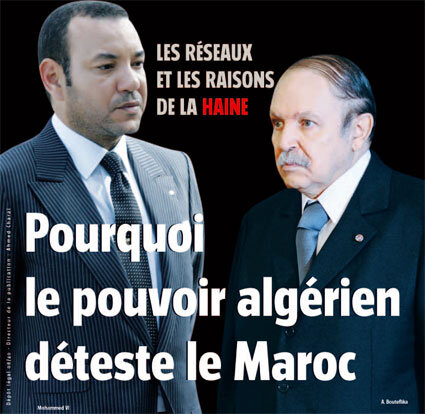
The first and most important area concerns our unwavering commitment to building a stable, integrated and prosperous Maghreb Union. In order to bring about conditions that are conducive to promoting Maghreb joint action as a strategic option designed to fulfil the aspirations of all five peoples for integrated development, and to respond to the requirements of regional partnership in this era of international blocs, I stress my sincere desire for a normalization of Moroccan-Algerian relations, in keeping with a forward-looking approach which transcends obsolete stances that are contrary to the spirit of openness marking this 21st century, especially that of the Algerian authorities, who maintain their unilateral decision to close the land border.

This regrettable attitude is incompatible with the basic right of two neighbouring peoples to exercise their individual and collective rights to freedom of movement and to human and economic exchange. True to the Maghreb spirit, I shall continue to work untiringly and support the United Nations’ constructive efforts to reach a lasting, mutually acceptable political solution to the regional dispute over the Moroccanness of the Sahara.

In this respect, I wish to stress my commitment to the bold autonomy initiative because of its serious, credible character that has been recognized by the international community, because of the human rights guarantees it provides, because of the reconciliation and reunification of all the sons of the Moroccan Sahara it seeks to achieve, and because of its constructive vision of the Maghreb and of the region, which is designed to help our region rise to the challenges of development, and guarantee progress and prosperity for all its populations.

With the same resolve, I shall pursue my efforts to strengthen the bonds of Arab and Islamic brotherhood by promoting concrete economic and development projects, and by continuing to support the just causes of our Ummah, particularly in my capacity as Chairman of the Al-Quds Committee. I shall continue to do my utmost to preserve the character of Al-Quds as the future capital of an independent, fully sovereign Palestinian state. I wish to emphasize that Morocco adheres to the international consensus regarding a two-state solution and welcomes the commitment of the United States Administration to a just solution, with all that this implies in terms of requirements and consensual agreements.

The third area concerns the concrete manifestation of the Kingdom’s solidarity and cooperation with sister African nations, especially neighbouring Sahel countries. We must work untiringly to establish genuine partnerships with these African countries, both to serve our common interests and to achieve sustainable development.

Moroccan know-how and expertise should be used to develop model South-South cooperation mechanisms, and implement structural and human development projects.
To optimize the advanced status enjoyed by Morocco in its partnership with the European Union, I call on all the national stakeholders concerned to make concerted efforts to rise to this challenge, and use the opportunities this status offers in various sectors as best they can.

Concurrently, we should continue to be effectively involved in what is at stake in our region by, for example, helping to get the promising Union for the Mediterranean under way.

Similarly, we should pursue the diversification of our partnerships, and build fruitful relations in all parts of the world.

To shore up the comprehensive mandate of our diplomatic service, we have to be effectively involved in multilateral issues and in resolving global problems.

My loyal subjects,
On this historic occasion, I pledge, once again, to pursue my mission as leader of the nation, in accordance with the mutual act of allegiance binding us.
I hereby undertake, with the same resolve, sincerity, sense of purpose and clear-sightedness that have always characterized my action, to strive doubly hard to pursue our development action as efficiently as possible.

Our most valuable assets, in this regard, are the solid bond between the throne and the people, and the full mobilization of our energies and resources to rise to challenges through hard work and confidence in the future. We, thus, remain faithful to the memory of my venerable grandfather, His Majesty King Mohammed V, and to that of my revered father, His Majesty King Hassan II. May the Almighty bless their souls.

I wish to express my consideration for the Royal Armed Forces, the territorial authorities, the Royal Gendarmerie, the National Police Force, the Auxiliary Forces and the emergency and rescue units, and commend them for preserving the nation’s security and stability.

I also ask Almighty God to protect all Moroccans, wherever they are, and to continue to shower His blessings upon this land.

I implore the Almighty to grant every Moroccan man and woman - at home and abroad - success and happiness and to fulfil their aspirations. May He support our joint endeavours for the unity, stability, progress and prosperity of our beloved nation. He is our Protector; the best to protect, and the best to help.

“Say: this is my way: I do invite unto Allah, on evidence clear as the seeing with one's eyes, I and whoever follows me”. True is the Word of God.

Wassalmau alaikum warahmatullah wabarakatuh

Posté par moulay abdellah à 16:06 - Commentaires [0] - Rétroliens [0] - Permalien [#]

mardi 21 juillet 2009

Obama :Highlights from Ghana

Obama :Highlights from Ghana
Vidéo envoyée par amitie2000

Highlights from Ghana Posted by Jason Djang President Obama celebrates and challenges Africa in his first visit to the continent since being elected. Catch a glimpse of his reception among the Ghanaian people.Learn much more about the trip, watch his full remarks, or read the text of the speech in five languages here.

Posté par moulay abdellah à 20:46 - Commentaires [0] - Rétroliens [0] - Permalien [#]

Le Roi Mohammed 6, une décennie de règne : réalisations, horizon et perspectives.

41958130_phttp://mohamed6.canalblog.com/archives/2009/07/21/14476092.html

Posté par moulay abdellah à 19:17 - Commentaires [0] - Rétroliens [0] - Permalien [#]

lundi 20 juillet 2009

Weekly Address: Health Care Reform Cannot Wait

Weekly Address: Health Care Reform Cannot Wait

Posted by Jesse Lee

The President calls on Congress to seize this opportunity – one that may not come again for decades – and finally pass health care reform: "It’s about every family unable to keep up with soaring out of pocket costs and premiums rising three times faster than wages. Every worker afraid of losing health insurance if they lose their job, or change jobs. Everyone who’s worried that they may not be able to get insurance or change insurance if someone in their family has a pre-existing condition..."


Posté par moulay abdellah à 18:21 - Commentaires [0] - Rétroliens [0] - Permalien [#]


Page suivante »